


Cataracts
What is a cataract?
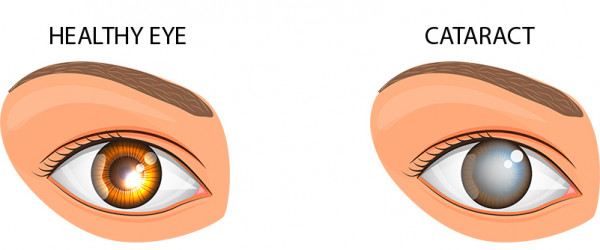
A cataract is a clouding of the natural lens inside the eye. Cataracts develop as part of the natural aging process of the eye. However, cataract development can be caused by or be sped up by previous eye surgery, injury, certain diseases, and even some medications. Cataract development usually does not harm the eye but causes blurry vision.
Cataracts usually progress slowly over a period of years and in early stages, stronger eyeglasses or brighter light may help. As cataracts progress and the lens becomes more cloudy, patients often experience symptoms such as painless blurry vision, glare, and haloes around lights at night, double vision in one eye, need for bright light to read, and fading or yellowing of colors.
How is a cataract detected?
By performing a thorough eye examination, your eye doctor can detect the presence of a cataract. Careful evaluation will also rule out any other conditions that may be causing blurred vision or other eye problems.
Problems with other parts of the eye (such as the cornea, retina, or optic nerve) can be responsible for vision loss and may prevent you from having much or any improvement in vision after surgery. If improvement in your vision is unlikely, cataract removal may not be recommended. Your eye doctor can tell you how much visual improvement is likely.
How is a cataract treated?
Surgery is the only way a cataract can be treated. No medications, dietary supplements, or exercises have been shown to prevent or cure cataracts.
When should surgery be done?
Cataract surgery should be considered when cataracts cause enough loss of the clarity of your vision to interfere with your daily activities. Based on your symptoms you and your eye doctor should decide together when cataract surgery is appropriate.
If it is determined that it is time for surgery, your surgeon will do a complete evaluation of your eyes and also do measurements for the artificial lens that will be implanted to replace your natural lens that has become a cataract. Are you interested in Cataract Surgery?
To schedule an appointment, call (509) 456-0107
In the news
September 11, 2025
Eye Injury Prevention
Protecting your eyes from injury is one of the simplest things you can do to keep your vision healthy throughout your life.
August 13, 2025
Wildfire Smoke & Your Eyes
There has been a lot of news about how to care for your lungs, but we wanted to share some easy-to-follow tips to care for your vision during thick wildfire smoke.


